Wednesday, March 20, 2013

Firsts: The First Release From Spencer Hill Contemporary!

As the Editor-in-chief of Spencer Hill Contemporary (the new contemporary imprint of Spencer Hill Press) next week marks a very exciting FIRST for me: our first release! After many months of editing and planning, the day is finally almost here and I could not be more thrilled to share CAMP KISS (a CAMP BOYFRIEND novella) with the all of you!

J.K. Rock (pseudonym for amazing author team Joanne & Karen Rock) were also the first authors I signed when the imprint officially launched and they have been a blast to work with. Their stories and characters make me feel like I am back at summer camp, falling in love for the first time all over again, and I could not be more proud of the work they've done leading up to next week's release.

CAMP KISS will be available as a free download on Spencer Hill Contemporary's site next Tuesday (March 26, 2013!) and I would love to hear what you think of it!


About CAMP KISS:

The Camp Kiss That Started It All…
Lauren Carlson, a fourteen-year-old expert on the cosmos, superheroes, and science fiction trivia has a crush on her longtime camp friend, Seth. Last summer she’d dreamed about upgrading their relationship to BF/GF status and this year she has a plan… if only her well-meaning cabin mates wouldn’t interfere before she’s ready. She hasn’t even adjusted to her new braces yet, let alone imagined kissing Seth with them. When a dare pushes her out of her comfort zone, will she and Seth rocket out of the friendzone at last? There’s only one way to find out….


About CAMP BOYFRIEND:
Releases from Spencer Hill Contemporary on July 2, 2013. 

The summer of her dreams is about to get a reality check.
They said it  couldn't be done, but geeky sophomore Lauren Carlson transformed herself into a popular girl after moving to a new school halfway across the country. Amazing what losing her braces and going out for cheerleading will do. Only trouble is, the popular crowd is wearing on Lauren's nerves and she can't wait to return to summer camp where she's valued for her brain instead of her handsprings. She misses her old friends and most of all, her long time camp-only boyfriend, Seth. This year she intends to upgrade their relationship to year-round status once she's broken up with her new, jock boyfriend, Matt. He doesn't even begin to know the real her, a girl fascinated by the night sky who dreams of discovering new planets and galaxies.

But Matt isn't giving her up without a fight. As he makes his case to stay together, Lauren begins to realize his feelings run deeper than she ever would have guessed. What if the guy she thought she was meant to be with forever isn't really The One? Returning to Camp Juniper Point was supposed to ground her uprooted life, but she's more adrift than ever. Everything feels different and soon Lauren's friends are turning on her and both guys question what she really wants. As summer tensions escalate, Lauren wonders if she's changed more than she thought. Will her first big discovery be herself?

You can find J.K. Rock online:

Goodreads / Author Website / Series Website / Karen's Twitter / Joanne's Twitter / Facebook / Pinterest / Amazon / Barnes & Noble


Do you have any exciting FIRSTS happening this month? We'd love to hear about them in the comments! 


Monday, March 18, 2013

The First Line Makes the Paragraph Makes the Book

When I was in school, my professor always told us the first line of our short story should be something that sets up the story. It should be engaging, powerful, and reveal something about the atmosphere of the book. (And she really frowned upon us opening anything with a line of a dialogue.)

Something I've learned in my years since college and my time as an editor: the first line of a book really does matter. It's immediate insight into the voice of an MC. The first line of the book carries a lot of weight, and the weight is very different than the last line. It's the first chance to make a reader invested in the book. Whereas the last line is the image that a reader is left with forever. We need an engaging first line to lead into an engaging first paragraph to make way for a fantastic book.

Let's look at some first lines:

I must’ve taken a wrong turn somewhere in the darkness. 
~Salvation, my short story from college

Jenny-May Butler, the little girl who lived across the road from me, went missing when I was a child. 

~There’s No Place Like Here by Cecelia Ahern 

  My hands are dying.  
~Fall For Anything by Courtney Summers

The Narrows remind me of August nights in the South.
~The Archived by Victoria Schwab

Those were the last words I could remember.
~Infinite Days by Rebecca Maizel

You saw me before I saw you. 
~Stolen by Lucy Christopher

It all started when the cold came. 
~ Fall Apart, an unfinished MS by me

Gram is worried about me. 
~The Sky is Everywhere by Jandy Nelson

Everything changed the night I saw a burning man fall from the sky.
~Falling Under by Gwen Hayes

There's something powerful about a great first line. All of these ones I've chosen are first lines that set up character or plot or voice. And if you're interested in the first line, you'll want to read the paragraph. A good first paragraph is what captures a reader, so failing to use it properly means potentially losing people. I'm not going to do all of them, but let's look at some of these first paragraphs.

I'm going to cheat and start with the first two paragraphs of The Sky Is Everywhere because they are just so good. 

Gram is worried about me. It's not just because my sister Bailey died four weeks ago, or because my mother hasn't contacted me in sixteen years, or even because suddenly all I think about is sex. She is worried about me because one of her houseplants has spots.

Gram has believed for most of my seventeen years that this particular houseplant, which is of the nondescript variety, reflects my emotional, spiritual and physical well-being. I've grown to believe it too. 

I love these opening paragraphs because it tells you so much about the character, and the fact that sticks out the most isn't her sister's death or her age or her mother or sex -- it's that houseplant. A houseplant that is relevant throughout the entire book. This opening is quirky enough to stick out while still setting up the story and the upcoming struggle.

This next one is from Stolen by Lucy Christopher -- which is an amazing, amazing book and if you have not read it then go get it right now. 


You saw me before I saw you. In the airport, that day in August, you had that look in your eyes, as though you wanted something from me, as though you'd wanted it for a long time. No one had ever looked at me like that before, with that kind of intensity. It unsettled me, surprised me, I guess. Those blue, blue eyes, icy blue, looking back at me as if I could warm them up. They're pretty powerful, you know, those eyes, pretty beautiful, too. 


That may not seem like much, but trust me when I say: it is. It's setting up plot, character, voice. It's setting up the first moment where Gemma meets Ty and all hell breaks loose. It's powerfully written, just like that whole book. (Seriously. Go read it.)

This last one is from my own stuff. A story I started (and didn't get to finish because of having all the deadlines.) It's not edited and I'm not even sure it's worth sharing, but I love this opening.

It all started when the cold came. Fast, brittle, unexpected. That first morning in late October when it snowed on the way to school, and I stopped walking to watch it all fall around me. I love that feeling, being suspended in air while the frosty flakes of broken clouds fall around and land on my face. I felt like I was moving, losing control, even though my feet never left the ground. I felt like I was a snowflake. I was a huge ball of fluff reaching out toward the ground like a star—a shooting star. A star that falls apart and dissolves away. I’m pretty sure that was the day—the exact that moment—life started to unravel.  

The snow was too early. Even in New England, it didn’t snow that early. I’ve been searching for The Moment for months, and that was it.

That's an intro I like because the whole story is this girl has seen how one moment affects another and another and another--until all she's left with is the pieces of her life that don't go together anymore, and she's trying to understand it. So I like that intro, even if I never write again, because it's her looking beyond herself to find someone to blame -- and that's really the cause of the whole story.

Anyway---the whole point of this was to show how first lines are powerful. A powerful first line will create a memorable first paragraph and keep people reading. I'm a big fan of great first lines (and last lines) so I would definitely encourage you to find the moment, that image, that line that sets up the whole story and make the first one count.

What are some of your favorite first lines or paragraphs? Feel free to share from your own work or from your favorite books! 


Friday, March 15, 2013

Firsts: The First Query

When it comes to talking about writing firsts, it's easy to get a little lost in all the "firsts" I've experienced.
It was hard to choose which first to talk about. In the end, though, I decided there was no first more memorable, or terrifying, than that first query being sent.

It was a moment that had been coming for a couple of years. I wrote and scrapped and started over. I revised and deleted and changed and added. And yeah, you probably know the drill. Then, that moment came when it was finally time to press send on that very first query. I'm pretty sure my finger hovered over the send button for a record amount of time. And that was before I slammed my laptop closed and walked away, convinced there was no way I could ever actually send a query.

But then I told myself I had to rip it off. Like a band aid. (I tell myself this frequently.) So that's what I did. I re-opened the email and sent the darn thing. It was an amazing feeling! And then I wanted to do it again. And again. So I did. I sent those queries because it felt good. But then the fear sets in. That omg they could be reading my query/pages right now fear. Yeah, that feeling never passed. That's the thing about sending the first query. It didn't become any less scary even after the thirtieth. But there really is a magical feeling in realizing you're doing it. You're out there and trying and maybe it won't work out, but it's still all kinds of awesome.

If you've been there and done that, what was it like for you to send that first query?


Wednesday, March 13, 2013

Firsts: My First Manuscript

For the next week or two most of us are going to be talking about Firsts. Firsts lines, books, chapters, kisses, fights...first anythings, really. And I wanted to talk about my first manuscript. The first full manuscript I ever wrote and what it taught me and what I gained from it. 

It's no surprise, if any of you have read my bio on here or know me, that I didn't really get into reading and writing until a few years ago. Don't get me wrong, I liked reading. I just never made the time for it like I do now and I didn't even really read YA. It wasn't until my sister shoved the Twilight books on me that I actually got into reading and YA. (And when I say shoved I mean it literally!) So it was after devouring the Twilight books and any other YA vampire books that I could find that I really started writing. I had played around a little with writing before then, but nothing serious--nothing that made me think I wanted to do this for real someday.

So, you might be able to guess that my first manuscript was a YA vampire story. This was before I even learned anything about the industry and how things took years to go from an author writing it to actually being in print. I went in thinking, 'Man this rocks. It's hard, but I'm writing a book! And it's gonna be awesome! And get published!'

Bless Danielle, is all I have to say. She was my first (another first!) critique partner and she read this vampire monstrosity of a story that I wrote. This story will always hold a special spot in my heart because it is what made me serious about writing, but let's be honest, it was not good. In fact, it was pretty terrible. 

But that's okay with me. Because even though this book will never see the light of day ever again (and I don't want it to! lol) I learned so much from it. My first manuscript was an amazing learning experience. Through it, I learned how to craft a story better, how to create sentences worth reading, how to develop characters and plots and so much more! I also learned what critique partners and beta readers were. I learned so much about the industry from research and making connections all because I decided one day to write. I decided to do the most I could to break into this industry that stole my heart. (Cliche sounding, I know, but it's true.)

I wouldn't change my writing journey for anything. My first manuscript taught me so much and I'm so thankful for all that I've learned from it and all the people I've met because of writing it. That story led me to where I am now--and so many more firsts: first blog, writing event, request, agent, and so on! I can't wait to see what other firsts are waiting for me, all because of one little story that had to be written. 

What did your first manuscript/story/poem/ect. teach you?

Tuesday, March 12, 2013

Books that impacted little ariane


Most of the bloggers here at Tangled are starting  "first" theme this week, but I missed my chance to write about books that impacted me when I was growing up, so I'm going to revisit that theme with today's post!


When I think back to the books that made the biggest impression on me, it's strange now to see that they were all so very different from each other.  They weren't even really in the same genre. Is there a common link that ties them together?

Casey and the Coach by Holly Simpson
 My mom found this book for me at one of those used library sales and I must have read it about 3,000 times. I read it several times a year growing up. This book taught me early on how important it is for young girls to have characters they can relate to.  I was a gymnast, and so reading about gymnasts really resonated with me.  This book also features a key tension between Casey and her dad, who is also her coach.  My Dad was my kung fu coach when I was younger, and that was a really hard position to be in.  This book made me feel less alone because I could relate so clearly to Casey’s position. I write with that in mind, these days.  One of my only clear goals in writing is to provide relatable characters for less spoken to groups, like Jewish young adults.  This book also had a really cute love story. To this day, I curse Casey for forgetting to wear her skeleton t-shirt on Halloween.

 The Hero and the Crown by Robin McKinley .  We all have a McKinley book on our lists, right? (If you don’t, you’ve got some wonderful reading to do.)  This book really did a number on me. I read it in on day, beginning on the school bus on the way home and ending in the wee hours of the morning long past when I should have been in bed. The thing that’s always been so remarkable to me about this novel is the tone of it.  It’s so heavy.  Two scenes in particular stand out: When Aerin is climbing the steps of the tower forever, and when Maur’s head is wreaking miasma all over the palace. I haven’t read this book in at least a decade, and I can still remember those scenes so vividly, they’re so potent. I should really go back and dissect them and try to figure out how McKinley does it on a sentence level.  This book also has a great love story... or two great love stories.  Growing up, I was always a big Aerin/Tor shipper.  Now that I’ve aged, I have a greater appreciation for Luthe... but most of all I now understand why Aerin must delay one and love the other for a time.  I feel like this is a book that means so many different things to me as I age, and if I read it again in another ten years I’m sure I’ll discover new sides of it.

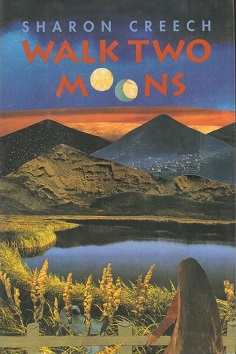
 Walk Two Moons by Sharon Creech.  Man, this book also did a number on me.  I did not expect the ending at all when I first read it, and when I reached the ‘twist’ I balled like a baby.  All night. I just wailed. A few years later, I read it out loud to my mom, who was unsurprised by the ending. She said “of course. I am a mother.  How could it be anything but that, Ariane?” And again, as I age, I see what she means.  As a child, that ending is unimaginable.  As a mother, it’s the only explanation. This novel really taught me how powerful a twist ending can be... although looking back I wonder if Creech even intended for it to be a surprise.

The Thief of Always by Clive Barker. This book has influenced me more than any other in my life. It was first read to me by my 6th grade teacher, and then I read it to my mom (the first in my tradition of reading to her while she cooked).  I found a dusty hardcover with illustrations in my brother’s room that I cherish to this day.   It has my favorite opening line: “The great grey beast February had eaten Harvey Swick alive.”  (There, now this entry is about Firsts, as well!) And my favorite final line, too. It introduced a question to me of which I’ve never grown tired: Is reality, with all of its pain and dark, worth sacrificing to escape? I didn’t intend for my first novel, ETHER, to be so similar to THE THIEF OF ALWAYS, but when I finished it I saw the links so clearly. I chewed and chewed on this question since 6th grade, when I was Harvey Swick’s age, and spat out my answer in ETHER when I was 23.

Some other books that impacted me a lot were AFTERNOON OF THE ELVES (Janet Taylor Lisle), TUCK EVERLASTING (Natalie Babbit), SCARY STORIES TO TELL IN THE DARK (Alvin Schwartz), LAND OF FOAM (Ivan Yefremov), and I HAVE LIVED A THOUSAND YEARS (Livia Bitton-Jackson).


Monday, February 25, 2013

I Have Never Forgotten

I have always had a knack for remembering stories.

It may have all started with Disney movies, because however many years later and I can still quote all the movies of my childhood. The songs, the words, the character's actions -- I am a one woman show. Or, it may have all started when I was even younger and watching this show called Kids Incorporated. A show I don't remember now but my mom says I would go around singing the songs in that show and re-enacting even when I was two.

Whatever the start, stories have always been a constant in my life. Especially when I love a story. Like those songs, that story stays with me. It influences me in some way. And those are the ones, I believe, that have a lot to teach us as writers.

If we are a writer, then we want to be remembered. We want to make other people feel the same way we did when we experienced a certain story. And, in order to figure out what made the story so important to us, we need to first identify what the stories are -- and then really think about what makes it tick. Understanding how and why and what is going to help your story have that "OMGosh! *flail*" quality that makes someone remember it. (In fact, as a testament, I always look for all three of these books when I go into used bookstores because I like to collect them.)

One of these for me is RUNNING OUT OF TIME by Margaret Peterson Haddix.

Jessie lives with her family in the frontier village of Clifton, Indiana. When diphtheria strikes the village and the children of Clifton start dying, Jessie's mother sends her on a dangerous mission to bring back help. But beyond the walls of Clifton, Jessie discovers a world even more alien and threatening than she could have imagined, and soon she finds her own life in jeopardy. Can she get help before the children of Clifton, and Jessie herself, run out of time?

I was in fifth grade when I read this story. It was this story about a girl learning the truth of her world because everything she knew and everyone she loved depended on her.

It was a story I've never, ever forgotten. And when my editor first read Follow Me Through Darkness, I remember her saying to me,"Have you read Running Out of Time?" And of course, that's how I knew she was the perfect person to handle my book. Even if I hadn't seen it before, that book obviously had a hand in creating FMTD. The circumstances are different and the world is different and mine has a lot more kissing than this MG does --- but that book (to everyone who's read it) is always remembered. When you read it, there's a tension that Running Out of Time creates and never loses. That tension drives the story. And honestly, being compared to a book that I read cover-to-cover as a kid and still own four copies of was a huge compliment. (I highly suggest everyone reads it because I still love it as an adult.)

Another for me is DREADFUL SORRY by Katherine Reiss.

Ever since she can remember, seventeen-year-old Molly has been plagued by the same terrifying nightmare and an almost overwhelming fear of water. After almost drowning at a pool party, she flees to the safety of her father’s house for the summer. But Molly’s problems only intensify as she stumbles onto a series of strange connections linking herself to a girl who lived in that Cliffside house nearly a century before. Then the eerie coincidences start to form a dangerous pattern, and Molly finds herself haunted by visions that feel more like memories--memories of a time before she was even born

I don't remember how old I was when I read this. I am pretty sure it was elementary school from the Scholastic Book Fairs flyer they they sent home every month.  But this cover was freaky.

I was a huge Goosebumps fan when I was a kid. (I had them all!) and I loved scary, creepy things. I still do. There's a scene in this book where the girl, Molly, drowns and I can still (like 100%) see it happening. (There's a creepy song involved.) Dreadful Sorry isn't as much in the front of memory as the others and it's not as easy to recall all the little details, but it's still a book I always remembered. That says something.

The other one (which should be no surprise to anyone) is A NORTHERN LIGHT by Jennifer Donnelly.

Sixteen-year-old Mattie Gokey has big dreams but little hope of seeing them come true. Desperate for money, she takes a job at the Glenmore, where hotel guest Grace Brown entrusts her with the task of burning a secret bundle of letters. But when Grace's drowned body is fished from the lake, Mattie discovers that the letters could reveal the grim truth behind a murder. Set in 1906 against the backdrop of the murder that inspired Theodore Dreiser's An American Tragedy, Jennifer Donnelly's astonishing debut novel effortlessly weaves romance, history, and a murder mystery into something moving, and real, and wholly original.

This is the book that made me want to be a writer. I wasn't a kid here. In fact, I was a sophomore in college. A Northern Light was the first YA book I read—and I didn’t even know it. I found this book sitting on this free table in our main building, picked it up and took it home. When I finished reading it, I was bawling to my roommate that 'I wanted to write a story like that' and she looked at me and said, 'Then do it.' I minored in writing because it was the most beautiful book I’d ever read and I wanted to be able to write like that. It wouldn't be until years later I learned it was a YA book.

If you haven't read this book then I highly recommend it. (All her books, actually. Just go do it now.) There's something about the way she can weave words together that makes everything she writes beautiful. And this story, Mattie's journey to find her life (which isn't in the blurb but should be because she a smart girl trapped in a small town with big dreams) was one I connected with. (For obvious reasons.) I hope that one day something I write makes someone feel the way I felt after I read this book.

Now, this post is hard because I've obviously read A LOT of books. I remember a vast majority of them too, but when I think back these ones come to me with absolute clarity. There's something powerful about stories you don't forget. These books serve as reminds.

They remind about those who have come before me. (And will probably last long after me.)

They remind me how being a kid (or a semi-adult) looking for direction can find it.

They remind why I am an editor and the role I get to play in creating books like this for other people.

They remind me what a gift I have that I get to put words together that could someday never be forgotten.

Friday, February 22, 2013

Small Press 411 Wrap-up


We started this blog series to get the information about small presses into the writing community. Today's the last day of Small Press 411, and I think we accomplished our goal, don't you, Jennifer?

I have to agree, Danielle. There so much information here that just isn't available on the rest of the interwebz! At least not all in one place!

I keep thinking about the last three weeks and all the information that we gathered. There's a lot here. I mean, if I didn't know anything about small presses then I would now. What are the three top things that stood out to you, Jennifer?

Top 3! It's so hard to choose! Okay, here I go...

1) When Heidi Kling said: I had an offer from one of the Big 6 for the first book (which was, essentially, the first three installments of Spellspinners), but went with Lisa [at Coliloquy] because of the innovative way she'd publish my series. As a planned 10-book series, is not insignificant.

An author making the decision to go with a small press over a Big 6 publisher because it was a better fit for that book. Not only is that (and I hate this phrase, so forgive me) outside the box thinking, but I think we'll be seeing more and more of this over the next few years as people realize that for some projects a small press really is the best fit.

2)When Kate Kaynak said, When we first started signing authors, none of them had agents, now more than half of our authors do. Many of them got their agents after signing with us for the first book--getting that first big break with us made agents take them more seriously. 

Because it is SO true. Having publishing credentials, especially with a reputable small press, is a nice way to let a potential agent you're the real deal. If you can say you were published with Entangled, Spencer Hill, Coliloquy, Month9 or Luminis Books, odds are you're a professional and you know how the publishing business works. Don't underestimate that!

3) When agent Victoria Marini said,  If it’s a small press with a good track record, skilled & enthusiastic editors, and a compromising attitude, I’m excited. But if it’s a press with a catch-all approach to rights (film, translation, merchandising, audio, first serial, etc.) or they refuse to negotiate any of their points, than I’m probably less likely to jump on that boat.

YES! This. A million times this. Everything depends on the individual press. Do your research!


I think my top three were:

1) When agent Jessica Sinsheimer said, “The choice between a large press and a small press is often like the difference between an enormous university and a small college. It depends on the sort of experience that is the best fit for the writer." Because that’s totally what it is—and I went to small college, so maybe that’s why I love it so much. 

I still talk to a couple of my professors, and it’s been almost four years, so that’s a difference. I remember being in college and telling a friend how I would spend hours in my advisor’s office talking about nothing and ranting and obsessing over every little decision and the friend, who went to really large college, said “Wait, your advisor knows your name?” That’s completely what it’s like, and it’s a great analogy

2) When publicist Jaime said she makes herself available practically 24/7! “I think that we have become one great big family who loves our authors and supports them fully.”

I pick that one because it’s true. I’m about to be published with Entangled and Jaime is my publicist so when I have questions, Jaime is around to answer them. I get the same experience with Cindy at Spencer Hill. Both of my presses as an author give me that always around and available feeling. And, as an editor, I try to do the same for my authors. It’s really important to me on both ends, so it's good to know that it's the standard for others.

3) Agent Julia Webers’s response to misconceptions about small presses. “I think there are writers who think that small presses are not as good as bigger houses. That's not true. They can (and do) publish books with the same (or at times even more/ better) dedication, professionalism and quality as bigger houses. They just don't have the same resources. Sure, they have a tighter budget when it comes to advances, publicity, marketing and advertising — but that doesn't make a small press any less worthy." 

I don't think I need a reason for this one because Julia said it all herself and I want to shout it from the rooftops.


All in all, I think this was a success. It seems the consensus on small presses is do your homework, know what you want, and trust your instincts. I think that's really valid advice.

I'm so glad we were able to put this together and get this extremely valuable information out there. Thanks so much to Danielle Ellison for letting me be a part of this awesome series. She's got some really exciting things coming up, like SALT, this August and FOLLOW ME THROUGH DARKNESS, next October!  

Thank you so much for joining as we de-mystified small presses! Thanks also to my lovely co-organizer, Jennifer Iacopelli -- and make sure you check out her book GAME. SET. MATCH. in May!

Please pass along this tool to other writers, because #SmallPress411 exists for you. Speaking of, we want to hear from you.

What things will stick with you from the series? Did any of the information surprise you? Was anything you thought about small presses proved wrong--or right? Did your mind get changed (or at least opened) to the truth and potential about small presses?